For two years I told myself my English was good enough. Clients understood me, orders came in, and nobody ever corrected my grammar to my face. Then a client I genuinely liked almost walked away, and it had nothing to do with my products. It was because of an email I wrote in under a minute.
My name is Leo. I run a small online business selling handmade leather goods, mostly to customers and wholesale buyers in the US and the UK. English is my second language. I read it fine and I speak it well enough on calls, because on a call you have a voice, a laugh, a chance to say sorry, let me rephrase that. Writing has none of those. A support email or a proposal is just words on a screen, and my words, it turned out, were much rougher than I knew.
The email that almost cost me a client
A wholesale client asked to change her order for the third time in a week. I was busy packing boxes, so I replied fast: Cannot do this. Already told you the deadline. Send final list today. In my head, that was efficient. In my culture, direct is polite, because you are not wasting anyone's time with decoration. I hit send and forgot about it. Two days later she replied, and I still remember going cold when I read it.
I have to be honest, your last few emails came across as pretty rude. If working with us is a burden, please just say so and we will find another supplier.
Rude. I read that word maybe twenty times. I was not angry at her. I was embarrassed. I liked this client, I had hand-packed every one of her orders, and she had just spent two days believing I did not want her business, all because I write English like I am paying per word. That night I understood something important: my problem was not vocabulary and it was not grammar. It was tone, and I could not hear my own.
Everything I tried first
I did not find the fix right away. Over the next few months I tried every workaround I could think of, and each one solved a small piece of the problem while creating a new one.
- Translation tools. I wrote in my own language and machine-translated to English. The grammar came out clean, but the result sounded stiff and ceremonial, like a legal notice. Clients went from thinking I was blunt to thinking I was a robot, and everything took twice as long to write.
- Hiring an editor. I paid a freelance editor to polish my important proposals, and she was genuinely good. But at per-document rates I could not justify her for daily support emails, and support that waits four hours for an edit is not really support.
- Avoiding writing altogether. I started pushing clients toward calls. A few liked it. Most just wanted a quick written answer and quietly resented being invited to a meeting about a shipping date.
What changed when I tried Grammarly
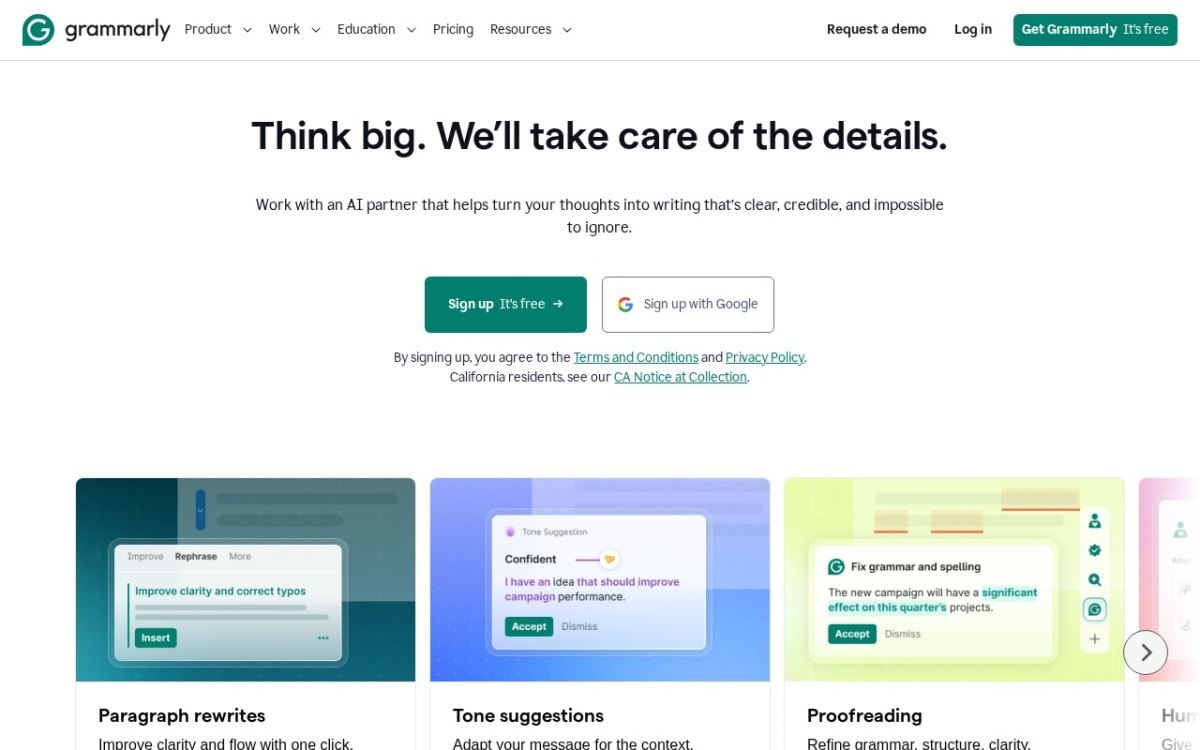
I installed Grammarly expecting a spell checker, mostly because it was free to try and I was out of ideas. The first surprise was the tone detector. Before you send anything, it tells you how your draft is likely to land: friendly, confident, formal, or, in my case, again and again, something in the direct-and-harsh neighborhood. Seeing that label on my own words did more for me than any grammar lesson ever had. The second surprise was the rewrite suggestions. It flagged my classic Cannot do this opener and offered a version that said the same thing with a human attached: that a change was not possible at this stage, that I understood the situation, that here was what I could do instead. Same facts, same deadline, completely different email.
How I use it every day now
The part that made it stick is that it works everywhere I already type. The browser extension sits inside Gmail, my store's admin panel, WhatsApp Web, and the forms on my suppliers' portals. I write my draft the fast, blunt way my brain produces English, then spend thirty seconds with the suggestions before sending. Underlines for grammar, a tone check on anything going to a client, and a full rewrite pass on proposals and anything with money in it. It adds under a minute to a normal email, which is roughly the time I used to spend rereading my drafts anxiously without actually catching anything.
I cannot give you a neat statistic, because I never measured my rudeness per email before. What I can tell you is what changed. Clients started replying warmer, because I started sounding warmer. The misunderstandings that used to eat whole afternoons, where someone read frustration into a message that had none, mostly stopped. The wholesale client stayed, and months later she mentioned, casually, that my emails had gotten really pleasant to read. And for the first time, I hit send on a proposal to a big buyer without asking my one bilingual friend to check it first. That confidence alone was worth the subscription.
What Grammarly will not do
To be fair about it: Grammarly polishes your ideas, it does not produce them. If you do not know what to say to an angry client, an empty page with perfect tone detection is still an empty page. It also occasionally suggests softening things that should stay firm, so you have to stay the editor of your own voice, not just accept everything. On cost, the free version catches grammar, spelling, and basic tone, and it is genuinely useful; I ran it for a month before paying. Premium adds the full rewrites and deeper tone adjustments, and for me those are the features that fixed the actual problem. If your writing risk is embarrassment, free may be enough. If your writing risk is revenue, premium paid for itself with one saved client.
Here is the thing nobody tells you about working in your second language: you are not just translating words, you are translating warmth, and warmth is the part that does not survive the trip. I used to think clients left over price or shipping times. Some do. But some leave because every email you send feels like a door closing, and they will never tell you that; they will just stop replying. I could not hear my own tone. Now I have something that can, and I sound like the person my clients meet on calls: someone who is actually glad they are here.
Full disclosure: this site earns a commission if you buy through some of our links, including the review linked above, at no extra cost to you. Nobody paid for this story. It is told from the point of view of a writer who spends the day inside an editing tool, and every detail about Grammarly above comes from what the company publishes rather than from testing we ran here. - Leo
Community discussion
Enjoyed this story? Share your thoughts below.