The best guest I ever booked - a founder I'd chased for eight months - gave me forty-five minutes of gold. Insights, stories, laughter, the works. And the recording sounded like a robot drowning in a swimming pool. That night I understood something every remote podcaster learns the hard way: your show is only as good as your worst internet connection. This is the story of how I stopped gambling every episode on Wi-Fi I don't control.
Who I am
I'm Jake. I run a weekly interview podcast about bootstrapped businesses from a spare room that doubles as a laundry-drying facility. No producer, no studio, no budget - just me, a decent microphone, and guests scattered across four continents. Like most independent podcasters, I do every job on the show: booker, host, editor, marketer, and, on bad weeks, therapist to myself.
The night I almost quit
You already know what tool I was using - the same video-call app everyone uses for meetings. It records whatever survives the journey across the internet, compression artifacts and all. Most weeks it was passable. Some weeks a guest's connection would hiccup and take a sentence with it. And then came the founder interview.
He was on hotel Wi-Fi. I watched his video freeze and recover, freeze and recover, and told myself the recording would be fine. It was not fine. Whole answers were smeared into digital soup. I spent six hours in my editor trying to rescue it, then sat back and faced the truth:
I could not publish my best interview ever, and there was no way to get it back. Eight months of chasing, gone to bad hotel Wi-Fi.
What I tried before
- Asking guests to record themselves locally as backup - two out of ten actually did it, one sent a file recorded by their laptop's built-in mic from across the room.
- A double-ender setup with separate recorder apps on each side - technically it works, practically it turns every guest into unpaid technical crew, and busy guests hate homework.
- Just accepting the quality - until a listener review said, kindly but honestly, that the show 'sounds like phone calls', and I couldn't unread it.
The turning point
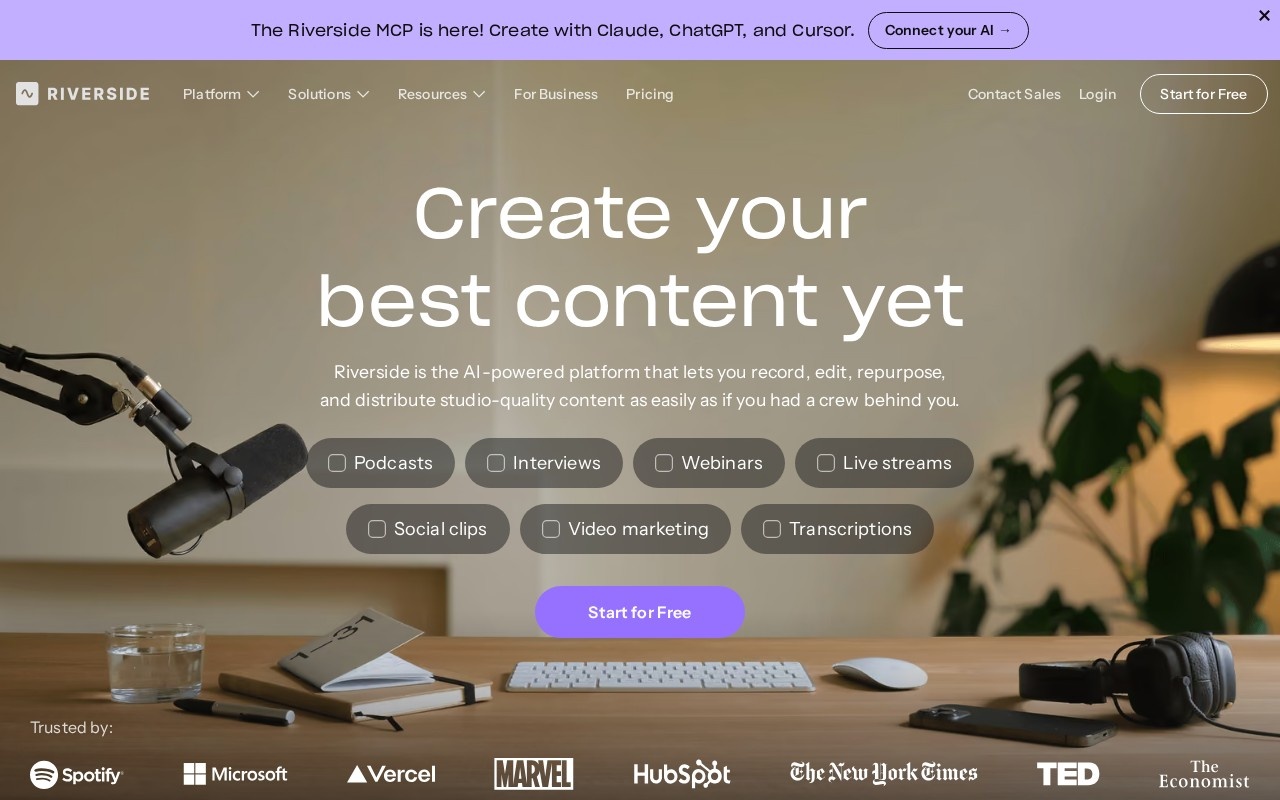
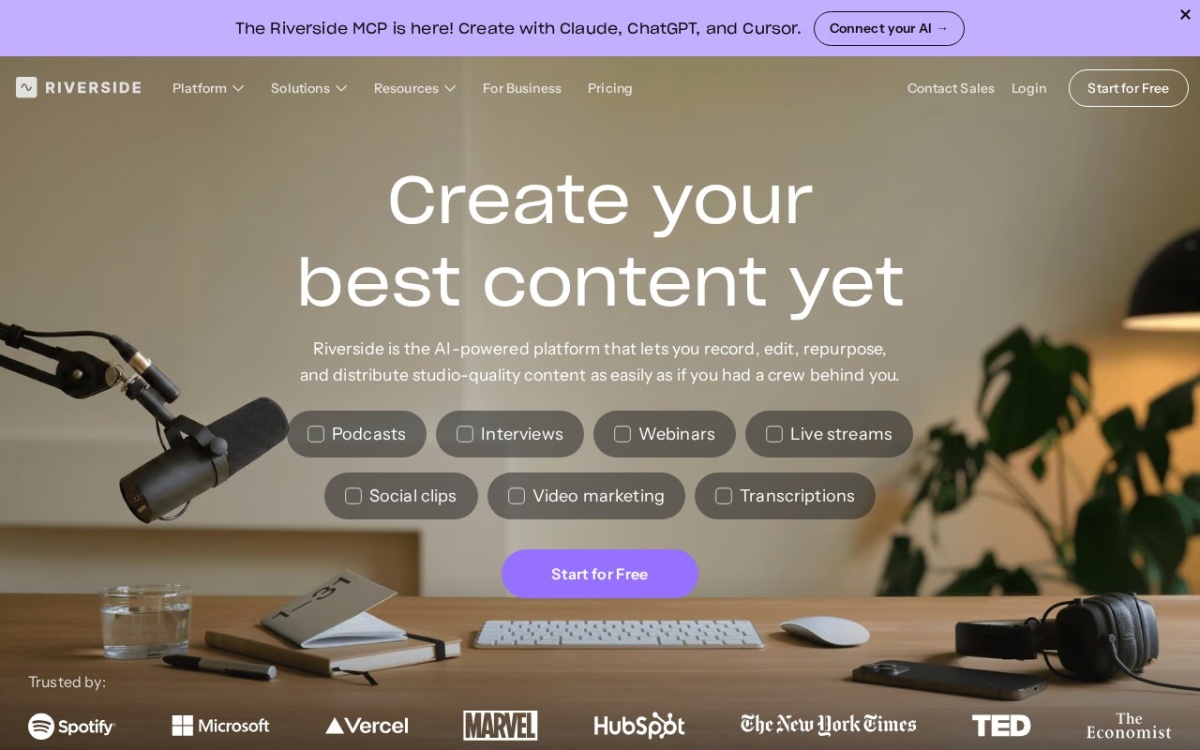
A podcaster friend with a suspiciously crisp-sounding show finally told me her secret wasn't a secret: Riverside. Her explanation rewired my understanding in one sentence - it records every person locally, on their own machine, and uploads the clean files in the background. The internet only carries the live conversation; it never touches the recording.
First test call, I did what every convert does: I sabotaged it. Mid-recording I had my brother, my test guest, turn on a speed test to strangle his connection. The live call stuttered exactly as expected. Then the files finished uploading and I played his local track - pristine. Not one artifact. I actually laughed out loud, alone, in the laundry room.
How I use Riverside now
Recording day
- Guests get one browser link - no installs, no accounts, no homework. The tech-anxiety emails stopped completely.
- Everyone records locally in high quality, separate audio and video tracks per person.
- For me: I stopped watching guests' connection bars with my stomach clenched. The live call can stutter; the recording doesn't care.
After the call
- AI transcription lands minutes after we hang up - I skim it to plan the edit instead of re-listening to the whole hour.
- Filler-word removal and text-based cuts handle the rough pass; deleting a sentence in the transcript deletes it from the audio.
- Magic Clips finds shareable moments and formats them vertically - my social clips went from 'never' to 'every episode' because the effort dropped to minutes.
The results that mattered
Keeping it honest and qualitative: episode audio quality jumped to the level listeners mention in reviews now instead of complaining about. Editing time dropped by hours per episode because clean separate tracks are simply easier to work with. Guest experience improved so much that booking got easier - people say yes faster when the ask is 'click this link' instead of a setup checklist. And I stopped losing episodes. That last one is the whole story, really.
What it doesn't fix
Fair is fair. Riverside won't make a boring conversation interesting, and its editor - good as it's become - still isn't a full production suite; I do fine-polish work elsewhere when an episode deserves it. The live call preview can lag even while recordings stay perfect, which spooks new users until they learn to trust the architecture. And on lower tiers you're budgeting recording hours, so a heavy interview schedule needs the right plan.
The new Jake
The old Jake ended every recording session by anxiously scrubbing through the file, praying. The new Jake ends sessions thinking about the conversation, because the capture is a solved problem. That founder eventually came back on the show - second chances are rare and I didn't waste it. The episode sounds like it was recorded in one room. It was recorded on two continents.
Should you try it?
If you record conversations with anyone who isn't in your room - podcast, YouTube interviews, expert content - yes, and the free tier is enough to run the same sabotage test I did. Solo narrators without guests don't need it. Everyone else: your worst future episode is one bad guest connection away, and this is the insurance.
Honest disclosure: my own subscription, my own ruined-episode scars. If you sign up through my link I may earn a small commission at no extra cost to you - it keeps honest write-ups like this coming. For scores, pricing tiers, and how it stacks against Descript, our full Riverside review and Riverside vs Descript comparison are here on the site.
- Jake
Community discussion
Enjoyed this story? Share your thoughts below.