

There is a genre of article I have grown tired of: the one that lists fifteen AI tools with a sentence each and tells you the future is here. It never explains how any two of them connect, what the combination is worth, or who would pay for the result. So this is the opposite. One chain, three tools, one service a freelancer can sell tomorrow - along with the parts that don't work, which is usually the half nobody writes down.
The observation behind it
Small businesses are sitting on spoken content they never turn into anything. The founder does a 40-minute podcast interview and it lives on one platform forever. A consultant runs a client workshop and the recording rots in a Drive folder. A coach answers the same five questions on every discovery call and has never written them down anywhere.
They know this is waste. What stops them is not the idea - it's that turning 40 minutes of messy speech into something publishable used to take a writer half a day. That is the gap the chain below closes, and closing it is the thing you can charge for.
The chain
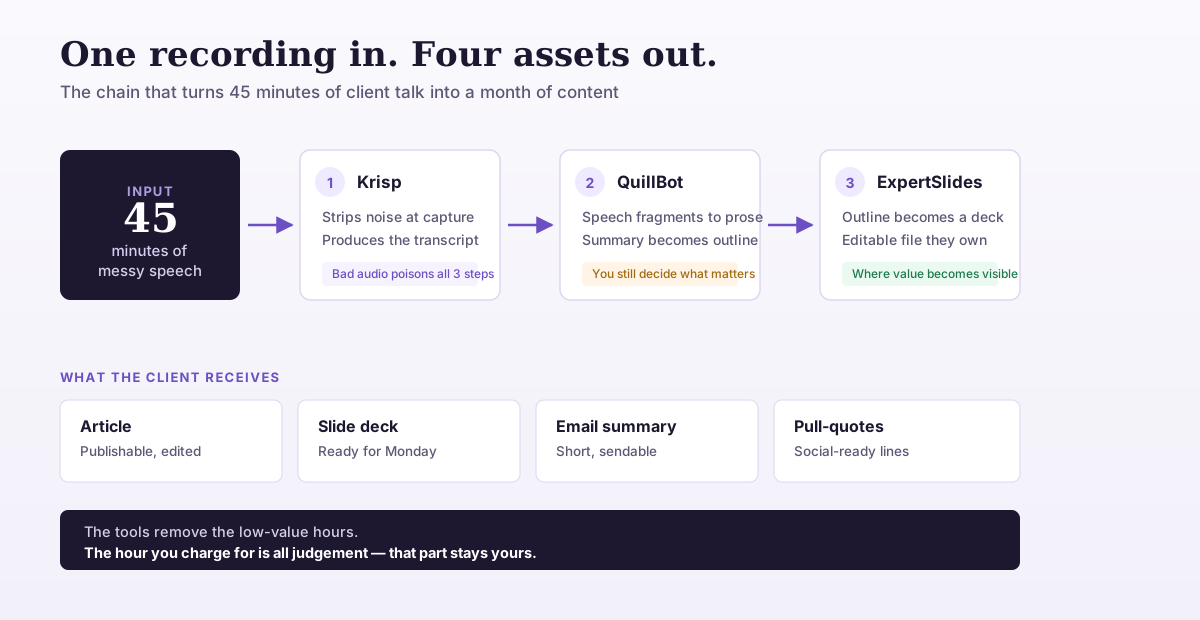
Three tools, each doing one job the next one depends on. The order matters more than the individual choices - garbage audio poisons everything downstream, so the cleanup step comes first, not last.
Step 1 - Krisp: get clean audio and a usable transcript
- Runs between the microphone and whatever is recording, stripping background noise and echo in real time - so the recording is clean at capture, not repaired afterwards.
- Produces a transcript and meeting notes from the call itself, which is your raw material for everything that follows.
- Why it goes first: transcription accuracy collapses on noisy audio, and every error there multiplies through the next two steps. Fixing a bad transcript by hand costs more than the whole rest of the workflow.
Full breakdown in our Krisp review.
Step 2 - QuillBot: turn spoken mess into readable prose
- A transcript is not an article. People speak in fragments, repeat themselves, and abandon sentences halfway. QuillBot's rewriting and summarising handles the mechanical part of that conversion.
- The summariser gives you the skeleton - main points in order - which becomes your outline instead of you building one from scratch.
- Where the human comes back in: it cleans sentences, it does not decide what matters. That judgement is what your client is actually paying for, and it is the reason this workflow needs you in it.
See the QuillBot review for what it does and does not do well.
Step 3 - ExpertSlides: package it as something they can use
- The written piece is one deliverable. The same material becomes a slide deck for their next pitch, a carousel for social, an internal one-pager - and that repackaging is where the perceived value jumps.
- Generates decks from your outline and works as a PowerPoint add-in, so the client receives an editable file rather than something locked in another tool's account.
- Why this step earns its place: clients rarely feel the value of a transcript. They feel it when they see their own words as a deck they can present on Monday.
Details in the ExpertSlides review.
So what does the combination actually produce?
One 45-minute recording in. Out the other end: a publishable article, a slide deck, a short summary for email, and a set of pull-quotes. The client speaks for 45 minutes and receives four assets. That framing - not the tool list - is the thing you sell.
Nobody buys 'AI content workflow'. They buy: you talk for 45 minutes, I hand you a month of content.
The money, honestly
The tool cost is the least interesting number here - three subscriptions, and all three have free tiers or trials you can validate on before paying. What matters is time. Doing this by hand is most of a working day. With the chain, the mechanical parts collapse to under an hour and your remaining time goes into editing and judgement, which is the part worth paying for.
That is the whole economic argument: the tools do not make the work valuable, they remove the low-value hours so the priced hour is all judgement. Whether that supports a viable service depends on your market and what you can charge - and anyone promising you a specific monthly figure has no idea what your market pays.
Where it breaks - the part other posts skip
- Bad source audio. Krisp handles noise; it cannot save a speaker who mumbles into a laptop mic across a room. Send clients a two-line recording guide before the call or the whole chain degrades.
- Rewriting is not editing. Run the transcript through paraphrasing and publish it and you get technically-correct writing that says nothing. The structure - what leads, what gets cut, what the reader needs first - has to come from a person. This is the step people skip and the reason so much AI-assisted content reads like fog.
- Accuracy is your liability. Transcripts mishear names, figures and technical terms constantly. If you publish a client's numbers wrong under their brand, that is your problem, not the tool's. Verify every proper noun and every number against the audio.
Who this is for, and who it isn't
It fits someone who already has clients and writing judgement - a freelance writer, a marketing consultant, a VA who wants to move up the value chain. For them the chain removes drudgery from work they already know how to do.
It does not fit someone hoping the tools substitute for the skill. If you cannot tell which 10% of a transcript matters, this workflow produces a large volume of mediocre content faster, which is worth less than nothing - to you and to the client.
Try it on your own recording first
Before selling it, run one recording you already have through all three steps and time yourself honestly. You will learn in one afternoon whether the output is good enough to put your name on - which is the only test that matters. All three have free entry points, so the experiment costs an afternoon rather than a subscription.
Disclosure: some links above are affiliate links - if you sign up through them, AIStackVerdict may earn a commission at no extra cost to you. It does not change what we recommend, including the section above about where the workflow fails. - Tom
Community discussion
Enjoyed this story? Share your thoughts below.